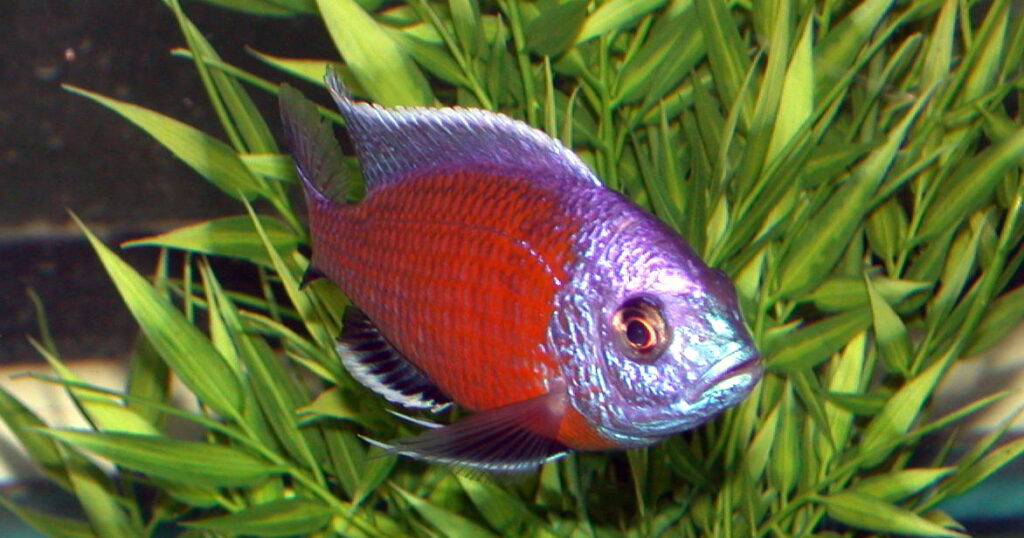




One popular species displays vibrant orange and blue blotches. Native to Lake Malawi, it thrives in community aquariums and pairs well with other social and colorful tank mates. Both types are playful and adaptable. Another well-known variety features bold red coloring and a lively, territorial nature. These species are often considered some of the easiest African cichlids to breed.
Breeding is often straightforward with the right setup and a compatible pair of animals. Factors like tank size, water temperature, and overall water quality play a key role, just as they do for many freshwater species. Ready to get started? Browse our available selection of beginner-friendly cichlids online.
Breeding Cichlids: Tank Requirements, Spawning, Feeding, and More
The first step in breeding cichlids is to successfully obtain a compatible breeding pair. There are two main strategies used to achieve this.
The first strategy is to purchase a group of six or more fish of your chosen species. With this method (six fish), there is a 98.5% chance of obtaining at least one male-female pair. This method is extremely effective and almost guaranteed to work, but it has its drawbacks regardless of which of the three species you choose. Buying six cichlids of the same species. Once the pair is formed, the other four fish must be relocated to a separate aquarium, which necessitates a completely new setup. If you don’t have another aquarium on hand, you may have to return them to the fish store. Want to try this method? Visit our selection of African Cichlids for sale now and get started.
The second strategy is to determine the sex of the fish yourself. Luckily, this isn’t too difficult with mature individuals of these species.
- Males will sometimes (but not always) be larger than females. They may also have a bump on their heads once they are mature.
- Mature female Cichlids are much easier to identify. Once ready to breed, a female Cichlid’s stomach will turn bright red.
- Males will NEVER have red bellies, so this method is quite reliable.
How to Get Your Cichlids to Spawn
The most important thing to remember with this step is that your fish MUST feel comfortable in their home.
- A nervous and scared fish will never spawn.
- Feed your cichlids protein-rich foods regularly. We prefer to use spirulina flakes herbivore fish food.
- When the female prepares to lay eggs, the nutrients in her body are depleted very quickly. Feed them enough!
Tips to Encourage Stubborn Cichlids to Spawn
There are several things you can do if your cichlids are being a little stubborn. Here are some tips to give them a little push:
Increase the Water Temperature: In the wild, Metriaclima zebra red minos reef spawn naturally during the summer months when the water temperature is warm. If your fish aren’t spawning, try increasing the water temperature by a degree or two (make sure it doesn’t exceed 82°F/28 °C). This will simulate the natural change of seasons and, hopefully, get your fish to spawn!
Perform A 20% Water Change: The summer months are often accompanied by heavy rainfall. Changing 20% of your tank’s water will simulate a heavy rainstorm and capitalize on the natural tendency to spawn. This is the most effective method.
Feed Abundantly: If Tropheus moorii yellow rainbow linangu is still hesitant to breed, try increasing the feeding frequency. If you can obtain live brine shrimp or dried bloodworms, feed your cichlids a few times a day. You can also use fish food to support their nutritional needs.
If You’ve Made It This Far, Congratulations!
You’ve probably noticed that the cichlids’ parents are fiercely guarding rows and rows of eggs on the inside wall of the pot.
- For the next 3-4 days, the eggs will remain in the same state. The parents will probably be hesitant to feed and will spend most of their time guarding the eggs; don’t worry, this is normal.
- After 4 days or so, the eggs should begin to hatch. The tiny fry will eventually fall to the bottom of the pot.
- At this stage, they are called “wigglers” because they can’t swim yet. The fry will stay at the bottom of the pot for about a week, absorbing the egg sac and gaining strength.
- During this time, it’s normal for the parents to pick up the wigglers in their mouths and move them around the tank. Don’t be alarmed by this!
(As a note, your pair of cichlids may eat their young during the first few spawnings. They are first-time parents and are still trying to figure everything out; this is normal.)
Feeding The Fry
After about seven days, the fry should be able to swim independently. Once the fry begin to swim on their own, you can be sure that the egg sac has been absorbed, and they are ready to start feeding on real food, such as brine shrimp.
Ready for the next step? Explore our Lake Malawi cichlids for sale and food options to support your fry.
Conclusion
If you follow the steps above, you should be able to successfully select a pair, encourage them to spawn, and raise the fry to adulthood.
Make sure you have a home for all the Lake Malawi cichlids you raise. Shop our selection of African Cichlids for sale online for your new arrivals.